
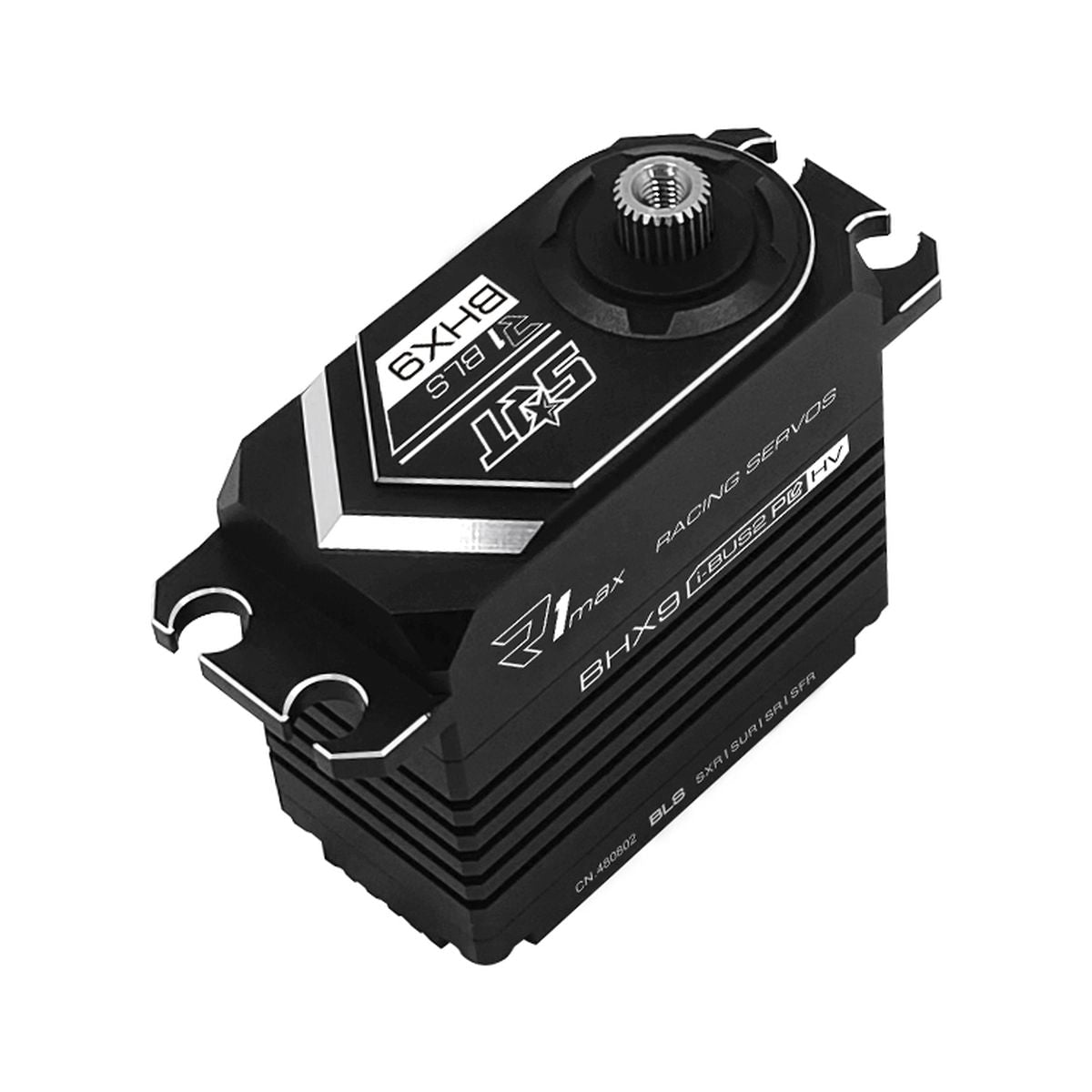
The steering servo is one of the most popular upgrades for any RC car, truck or crawler. A stronger, faster servo makes the truck turn sharper, hold its line over rocks and come back to center straight. But spec sheets are full of numbers. This guide explains the four that matter, torque, speed, size and voltage, and shows how to match them to how you drive.

1. Torque: how hard the servo can push
Torque is the turning force the servo puts on the steering, listed in oz-in or kg-cm (1 kg-cm is about 13.9 oz-in). More torque turns bigger, stickier tires and holds the wheels in place when they hit a rock or rut. Torque matters most on heavy vehicles with big tires, like crawlers, trail trucks, monster trucks and 1/8 bashers.
Always compare torque at the same voltage. The same servo makes more torque at 8.4V than at 6.0V, and brands often list the highest number first. For example, the Reef's RC RAW 500 is rated at 500 oz-in at 7.4V, while the Reef's RAW800LP is rated at 800 oz-in at 8.4V.

2. Speed: how fast it turns
Speed is listed in seconds per 60 degrees, so a smaller number is faster. A 0.06 sec servo turns twice as fast as a 0.12 sec servo. Speed matters most for racing and on-road driving, where quick, precise corrections keep the car on line. Drift cars benefit from very fast servos too, because the steering has to catch slides.
Low-profile racing servos like the Savox SC1251MGP-BE (0.09 sec at 6V) and the SRT CH6012 (0.06 sec at 7.4V, built for 1/10 touring and drift) put speed first. Crawler servos usually trade some speed for more torque.

3. Size: it has to fit the mount
A servo is no good if it won't fit the chassis. The common case sizes are:
- Standard: the most common size, used in most 1/10 and 1/8 trucks, buggies and crawlers.
- Low-profile: about the same footprint as a standard servo but shorter, for touring cars and race buggies with low chassis.
- Mini and micro: for 1/16 to 1/24 scale vehicles and small crawlers. The Savox SH-0255MG+ is a micro digital servo with metal gears.
- 1/5 scale (large scale): physically bigger servos for 1/5 and 1/6 vehicles, like the SRT large-scale HV servo.
Check the servo mount and horn clearance before you order, and read Understanding RC Servos for which size fits which scale.

4. Voltage: match the servo to your power
Servos are rated for a voltage range. Older and budget servos often run at 4.8 to 6.0V. HV (high-voltage) servos are rated up to 7.4V or 8.4V and make more torque and speed there. Your servo gets its power from the receiver, which is fed by the speed control's built-in BEC or a separate BEC.
- If your BEC puts out 6.0V, an HV servo still works, but you'll get the lower 6.0V ratings.
- Never run a servo above its rated voltage. Check the listing first. The Savox SB-2263MG-BE, for example, is rated for 4.8 to 6.0V.
- Big, high-torque servos draw a lot of current. If your receiver glitches or browns out under hard steering, a stronger external BEC usually fixes it.
Other things to check
- Waterproofing: for crawling through creeks, mud and snow, pick a servo rated waterproof. Reef's "Submarine" servos, like the BLK 1100 SMART, are rated for full submersion.
- Motor: brushless and coreless servos are faster and more efficient than basic cored servos.
- Gears: metal gears, especially steel or titanium, survive crashes much better than plastic.
- Spline and horn: most standard servos use a 25T output spline. Match your servo horn or servo saver, and consider an aluminum horn like the Reef's Shield V2 HD 25T.
- Lead length: some servos come in short and long lead versions, like SRT's 80mm (electric) and 180mm (nitro) versions.

Quick picks by vehicle type
- 1/10 crawlers and trail trucks: high torque (roughly 300 oz-in and up), waterproof, HV. Speed matters less.
- 1/10 short course, stadium trucks and bashers: a balance of torque and speed, waterproof, with metal gears.
- 1/8 buggies and monster trucks: high torque and good speed, HV, steel or titanium gears.
- 1/10 touring and drift: low-profile and fast, often 0.08 sec or quicker.
- 1/16 to 1/24 minis: a micro or mini servo that fits the stock mount.
- 1/5 scale: a dedicated large-scale servo with very high torque.

Browse every servo in our Servos collection, or shop by brand: Savox, SRT, Reef's RC, Futaba and Hitec. New to RC? Start with our RC Beginner's Guide.
Quick answers
How much servo torque do I need? It depends on vehicle weight, tire size and terrain. Light 1/10 on-road cars do fine with around 100 to 150 oz-in, while heavy crawlers and 1/8 trucks benefit from several hundred oz-in.
Can I put an HV servo in my RTR? Usually yes, as long as it fits the mount and your BEC voltage is within the servo's rating. At a 6.0V BEC you'll get its 6.0V performance.
Is a faster servo always better? No. For crawling, torque and smooth control matter more than speed. For racing and drifting, speed matters most.
Do I need a new servo horn? Only if the spline count doesn't match. Most standard servos use 25T, but check both the servo and the horn.