
Servo listings throw around a lot of labels: brushless, coreless, DC, digital, analog. Two of them describe the motor inside the servo, and the others describe the electronics that control it. Together they decide how fast, strong, smooth and long-lasting the servo is. This guide explains each type in plain language and when it's worth paying more.

Part 1: the motor
Cored (brushed DC) motors
A standard brushed motor has an iron core wound with copper wire. It's simple, proven and affordable, which is why it's found in most entry-level and sport servos. The trade-off is weight in the spinning part, so it speeds up and slows down a little more slowly than the other types. SRT labels these as "DC" servos, like the SRT DC digital servo with 277.7 oz-in at 6.0V.

Best for: first upgrades over a stock RTR servo, budget builds and backup servos.
Coreless motors
A coreless motor drops the heavy iron core. The copper windings form a light, self-supporting basket, so the motor starts, stops and changes direction faster. You feel it as quicker, smoother and more precise steering with better centering. Coreless servos cost more than cored ones and are popular in racing, crawling and bashing.
Examples include the Savox SW1210SGP-BE (waterproof, HV, 513.8 oz-in and 0.12 sec at 8.4V), the SRT W45 (waterproof, 624.9 oz-in at 8.4V) and the SRT CH7015 for 1/10 touring and drift.

Best for: most serious upgrades, where you want fast, precise steering without paying top price.
Brushless motors
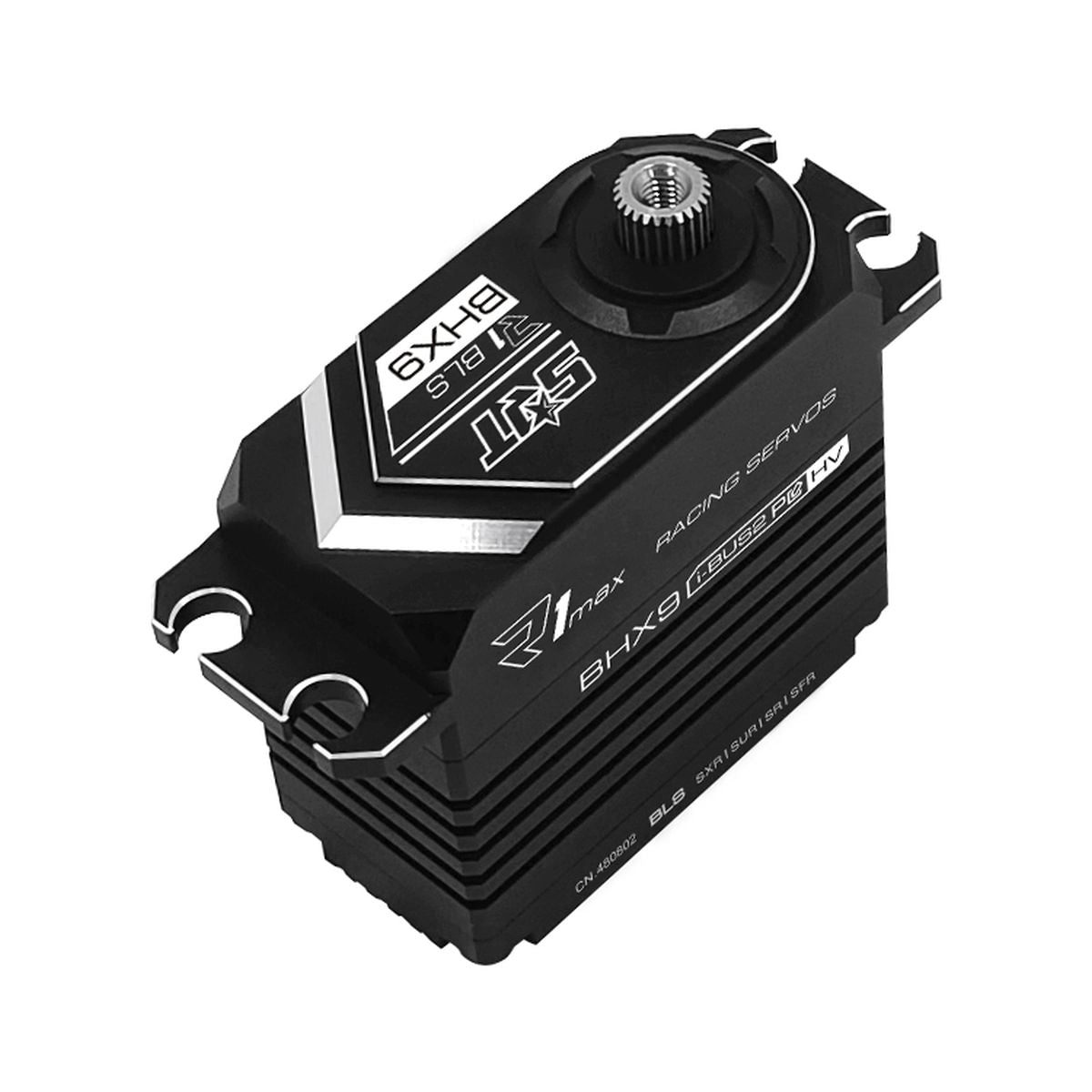
Brushless servo motors have no brushes to wear out. They're the most efficient type, with the highest power for their size and the longest motor life, and they handle high voltage well. They're also the most expensive. Many of the strongest servos we carry are brushless, like the SRT BHX9 (1041.6 oz-in at 8.4V) and the SRT T75 (972.1 oz-in at 8.4V). Low-profile brushless servos like the Savox SB2265MGP-BE are made for on-road racing.
Best for: heavy crawlers, 1/8 bashers and monster trucks, competition racing, and anyone who wants the longest-lasting servo.
Part 2: the electronics
Analog servos
An analog servo's control circuit sends pulses to the motor at a relatively slow rate. When the wheels are close to center, it pushes only gently, so there's a small "dead zone" where it holds less firmly. Analog servos draw less current and cost less. Today they're mostly found in budget, airplane and sport servos, like the Hitec HS-311 (51 oz-in and 0.15 sec at 6V) and the Hitec HS-425BB.

Digital servos
A digital servo uses a microprocessor that drives the motor many more times per second. It reacts faster to small stick movements, holds its position more firmly and returns to center more precisely. Many digital servos can also be programmed for end points, speed and center. The trade-off is higher current draw, so your BEC and receiver power need to keep up. Nearly every modern car and truck servo is digital, from the Savox SC-1268SG-BE for 1/8 scale to the Reef's RC 99 Micro.

How motor and electronics combine
The two labels are separate, so you'll see combinations like "coreless digital" or "brushless digital." Here's how they usually line up:
- Analog, cored: the most affordable. Fine for light vehicles, airplanes and spares.
- Digital, cored (DC): a solid, affordable upgrade for most RTRs.
- Digital, coreless: the sweet spot for most hobbyists, with fast, precise and smooth steering.
- Digital, brushless: the top tier, with the most power, efficiency and motor life.
Power matters more with better servos
Digital, coreless and brushless servos can all pull a lot of current, especially high-torque models at high voltage. If your receiver resets or the steering twitches under load, the servo is asking for more than your BEC can supply. A stronger external BEC usually fixes it. Always run a servo within its rated voltage, and see our guide on how to choose an RC servo for more on HV servos and voltage.
Quick answers
Is brushless always better than coreless? Brushless is more efficient and lasts longer, but a good coreless servo steers just as precisely for most drivers and costs less.
Can I use a digital servo with any radio? Yes. Digital servos work with standard RC receivers. Just make sure your receiver's power supply can handle the higher current draw.
Why does my digital servo buzz when the car is sitting still? A digital servo keeps making small corrections to hold its position, which can cause a quiet buzz. That's normal. Loud, constant buzzing or heat can mean the steering is binding or the end points are set too far.
What should I pick for a crawler? A waterproof, high-torque coreless or brushless digital servo. Read Understanding RC Servos for size and scale fit, then browse our Servos collection or shop Savox, SRT, Reef's RC, Hitec and Futaba.